
   |
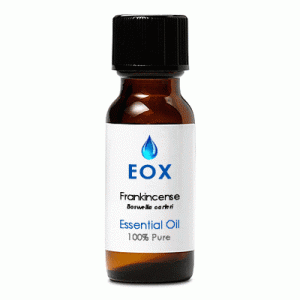
Essential Oil - Frankincense(Boswellia carteri)
calming, purifying Breathing the scent of frankincense oil slows and deepens the breath allowing one to become more centered. For this, it is prized as an invaluable aid to meditation and prayer. It was recently covered in BBC Online News as an anti-cancer agent. [See our blog commentary: Frankincense Oil and Cancer] Frankincense oil has many therapeutic applications, but its primary topical use is as an highly effective cosmetic for the reduction of wrinkles and fine lines when blended with evening primrose as a carrier oil.
Options:
|
|||||||
|
||||||||



Enter the coupon code SAVE10NOW during your online checkout. (1-time use)
