
   |
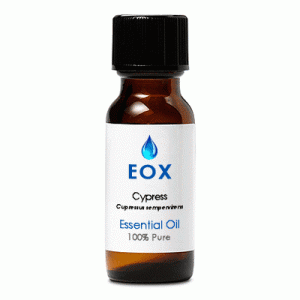
Essential Oil - Cypress(Cypressus sempervirens) uplifting, balancing Cypress is a tall evergreen tree native to the eastern Mediterranean where its longstanding medicinal use has been adopted by many cultures throughout the world. It has a wide range of therapeutic applications for skin care as well as the circulatory, respiratory, and nervous systems. In aromatherapy it is used through inhalation for strength and comfort. Topically cypress oil acts to reduce sweat from overactive oil glands, and it is used in high-end spa treatments to reduce fluid retention and cellulite.
Options:
|
|||||||
|
||||||||



Enter the coupon code SAVE10NOW during your online checkout. (1-time use)
