
   |
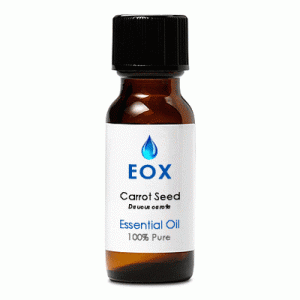
Essential Oil - Carrot Seed(Daucus carota)
regenerative, balancing Carrot seed oil has many aromatherapy applications, both topically for esthetic treatments and internally. It is used in dilution to revitalize skin suffering from a lack of tone and is used in all quality facial treatments. Internally a few drops can be taken in convalescence to stimulate and tone the liver to assist its regeneration. Carrot seed oil is generally non-sensitizing, but should be used in a carrier oil for topical treatments.
Options:
|
|||||||
|
||||||||



Enter the coupon code SAVE10NOW during your online checkout. (1-time use)
